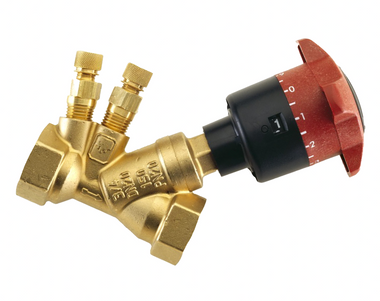
Armstrong 571110LF-341 CBV075VTCR Circuit Balancing Valve 3/4"
Armstrong 571110LF-341 CBV075VTCR Circuit Balancing Valve 3/4"
Couldn't load pickup availability

TIPS Contract Vendor
We are an officially awarded purchasing cooperative vendor.
📋 Procurement & Shipping Notice
- LTL Freight Dispatch: Heavy commercial units ship directly via insured LTL carrier with delivery coordination included.
- Project Timelines & Submittals: Need guaranteed delivery dates, formal submittals, or tax-exempt processing?
👉 Request a Commercial Quote or contact our procurement team for direct freight scheduling.
Corporate Procurement & PO Processing
Formal Purchase Orders (POs) and tax-exempt ordering are accepted for commercial contractors and institutional facilities.
Apply for Trade Account & Terms →| Performance Parameter | Engineering Baseline Value |
|---|---|
| Manufacturer Part Number (MPN) | 571110LF-341 |
| Model Designation | CBV075VTCR |
| Connection Size | 3/4" |
Maintain precise flow rates and hydraulic stability in your HVAC system with the Armstrong 571110LF-341 circuit balancing valve. Specifically designed as model CBV075VTCR, this 3/4" valve allows for accurate measurement and regulation of liquid flow, ensuring that every branch of your hydronic loop receives the intended thermal output.
This valve utilizes a multi-turn design to provide high-resolution flow adjustment. By allowing technicians to manually set the flow through the circuit, it prevents energy waste and eliminates common comfort complaints related to uneven heat distribution or cooling imbalances in large-scale building loops.
Key System Performance Baselines:
- Precision Regulation: Fine-tuned multi-turn adjustments for exact hydronic balancing.
- Flow Measurement: Integrated pressure ports allow for accurate differential pressure readings.
- System Efficiency: Reduces pump strain by maintaining balanced resistance across the entire heating or cooling loop.
⚠️ Application Profile: Ideal for commercial hot water heating systems, chilled water loops, and terminal unit zone control to ensure optimal thermal distribution throughout the building infrastructure.