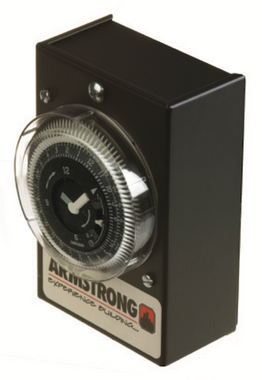
Armstrong 810123-130 Astro Series 24-Hour Clock Timer
Armstrong 810123-130 Astro Series 24-Hour Clock Timer
Couldn't load pickup availability

TIPS Contract Vendor
We are an officially awarded purchasing cooperative vendor.
📋 Procurement & Shipping Notice
- LTL Freight Dispatch: Heavy commercial units ship directly via insured LTL carrier with delivery coordination included.
- Project Timelines & Submittals: Need guaranteed delivery dates, formal submittals, or tax-exempt processing?
👉 Request a Commercial Quote or contact our procurement team for direct freight scheduling.
Corporate Procurement & PO Processing
Formal Purchase Orders (POs) and tax-exempt ordering are accepted for commercial contractors and institutional facilities.
Apply for Trade Account & Terms →| Performance Parameter | Engineering Baseline Value |
|---|---|
| Manufacturer Part Number (MPN) | 810123-130 |
| Model Designation | Astro Series 24-Hour Timer |
Automate your hydronic system circulation cycles with the 810123-130 Armstrong Astro Series 24-Hour Clock Timer. Designed to offer precise control over pump operation, this timer ensures your heating or domestic hot water system runs only when needed, reducing unnecessary energy consumption and mechanical wear on your equipment.
This timer operates on a continuous 24-hour cycle, allowing users to set specific "on" and "off" intervals throughout the day and night. The internal clock mechanism triggers the pump based on the user-defined settings, providing seamless integration with Astro series circulators to maximize system efficiency without manual intervention.
Key System Performance Baselines:
- Energy Efficiency: Reduces pump idle time to lower monthly utility costs.
- Precise Scheduling: Offers reliable 24-hour cycle control for customized comfort.
- Seamless Integration: Engineered specifically for compatibility with the Armstrong Astro series line.
- Extended Lifespan: Minimizes unnecessary run time to preserve circulator internal components.
⚠️ Application Profile: Ideal for domestic hot water recirculation loops, zone heating systems, and multi-unit residential hydronic setups where demand-based operation is required.