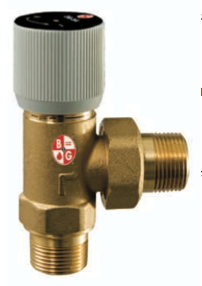
Bell & Gossett 113247 3/4" Differential Bypass Valve
Bell & Gossett 113247 3/4" Differential Bypass Valve
Couldn't load pickup availability

TIPS Contract Vendor
We are an officially awarded purchasing cooperative vendor.
📋 Procurement & Shipping Notice
- LTL Freight Dispatch: Heavy commercial units ship directly via insured LTL carrier with delivery coordination included.
- Project Timelines & Submittals: Need guaranteed delivery dates, formal submittals, or tax-exempt processing?
👉 Request a Commercial Quote or contact our procurement team for direct freight scheduling.
Corporate Procurement & PO Processing
Formal Purchase Orders (POs) and tax-exempt ordering are accepted for commercial contractors and institutional facilities.
Apply for Trade Account & Terms →| Performance Parameter | Engineering Baseline Value |
|---|---|
| Manufacturer Part Number (MPN) | 113247 |
| Connection Size | 3/4" |
This hydronic control component serves as a critical pressure-regulating solution for residential and commercial heating systems. The Bell & Gossett 113247 differential bypass valve, part number 113247, is designed to automatically maintain minimum system flow rates, preventing pump strain and excessive noise when zone valves or thermostatic radiator valves close.
By monitoring the pressure differential across the heating circuit, the valve modulates flow to recirculate water back to the boiler. This mechanism ensures that the circulator operates within its intended curve, protecting equipment longevity while stabilizing heat delivery across multiple zones.
Key System Performance Baselines:
- Pressure Regulation: Automatically adjusts to bypass excess flow when system resistance increases.
- Hydronic Stability: Reduces hydraulic shock and noise caused by rapid closure of zone valves.
- Equipment Protection: Prevents pump dead-heading and overheating during low-load conditions.
- Energy Efficiency: Maintains consistent boiler return temperatures for optimized burner performance.
⚠️ Application Profile: Ideal for zoning systems with primary-secondary piping, standard hydronic heating loops, and radiant heating manifolds requiring consistent differential pressure management.